
What the iGaming World Gets Right About Strategic Thinking
The online casino and gambling sector operates under a level of analytical rigor that most fantasy managers never apply to their own game. Casino players who approach blackjack or poker seriously are not guessing; they are running expected value calculations, tracking variance, and managing their bankroll with clear rules.
These habits come from necessity. The UK gambling market is one of the most developed casino and gambling ecosystems in the world. Operators compete on product depth, and players in that space have access to sophisticated tools, odds calculators, statistical dashboards, and multi-variant betting structures.
The strategy required to succeed in that environment goes well beyond spinning slots. It involves reading patterns, managing exposure across multiple positions, and knowing when to hold back. Fantasy EPL managers who adopted even a fraction of that analytical mindset, particularly around squad depth and budget allocation, would make measurably better decisions across a full season.
Real-Time Strategy Games and Resource Management
RTS games like StarCraft or Age of Empires are built on a single underlying challenge: allocating limited resources to generate the best possible output under time pressure. Players who master these games develop strong instincts for opportunity cost; every unit built is a unit not spent elsewhere.
That mental model maps directly onto fantasy football squad building, where every pound allocated to a premium forward is a pound taken from defensive cover or midfield depth. The best RTS players also plan several moves ahead. They do not react to what is happening on screen right now; they build toward a position that will be advantageous three or four turns later.
Fantasy managers who think in this way, planning captain rotations across Gameweeks 20 to 28, for example, or structuring their squad to allow a double transfer in a specific week, consistently outperform those who manage week to week without a longer-term structure.
Chess Principles and Squad Structure
Chess rewards positional awareness over reactive play. The strongest players build board control early, protect their most powerful pieces, and avoid commitments that limit future flexibility.
In fantasy football terms, this translates to keeping your transfer budget intact until the right moment, protecting your captain option across double gameweeks, and avoiding hasty moves that lock you into a poor structure for several rounds. One of the most useful chess concepts for fantasy managers is the idea of tempo, making moves that force your opponent to react rather than act freely.
In a fantasy context, this means staying ahead of price changes, wildcarding at the right moment rather than under duress, and using chips like the bench boost or triple captain when they create maximum impact rather than as panic responses. Control over timing is a decisive edge most managers undervalue.
Building a Decision Framework That Holds Under Pressure
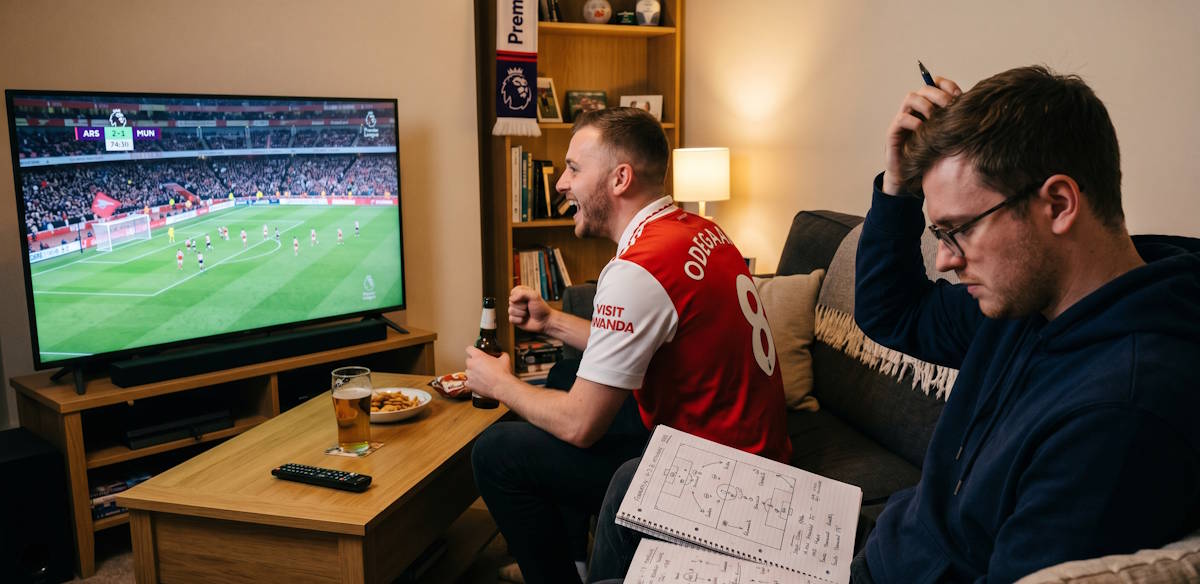
What unites many competitive gaming experiences is that they reward pre-built frameworks over improvised decisions. Strategy-focused players rely on systems, planning, and disciplined decision-making rather than emotional reactions in the moment. Fantasy football works in much the same way.
The most consistent FPL managers rarely make transfers based purely on one explosive gameweek. Instead, they often follow structured approaches: targeting players with strong fixture runs, avoiding unnecessary points hits, balancing premium assets across positions, and planning chip usage weeks in advance.
Successful managers also tend to set personal rules, such as limiting transfers after emotional losses, avoiding early bandwagons, or prioritizing reliable minutes over short-term hype.
This kind of structured thinking mirrors the strategic mindset seen throughout gaming culture. Whether it’s adapting to shifting situations, managing limited resources, or sticking to a long-term plan under pressure, FPL rewards managers who trust their framework rather than constantly chasing unpredictable outcomes.