
What Is a Prediction Market?
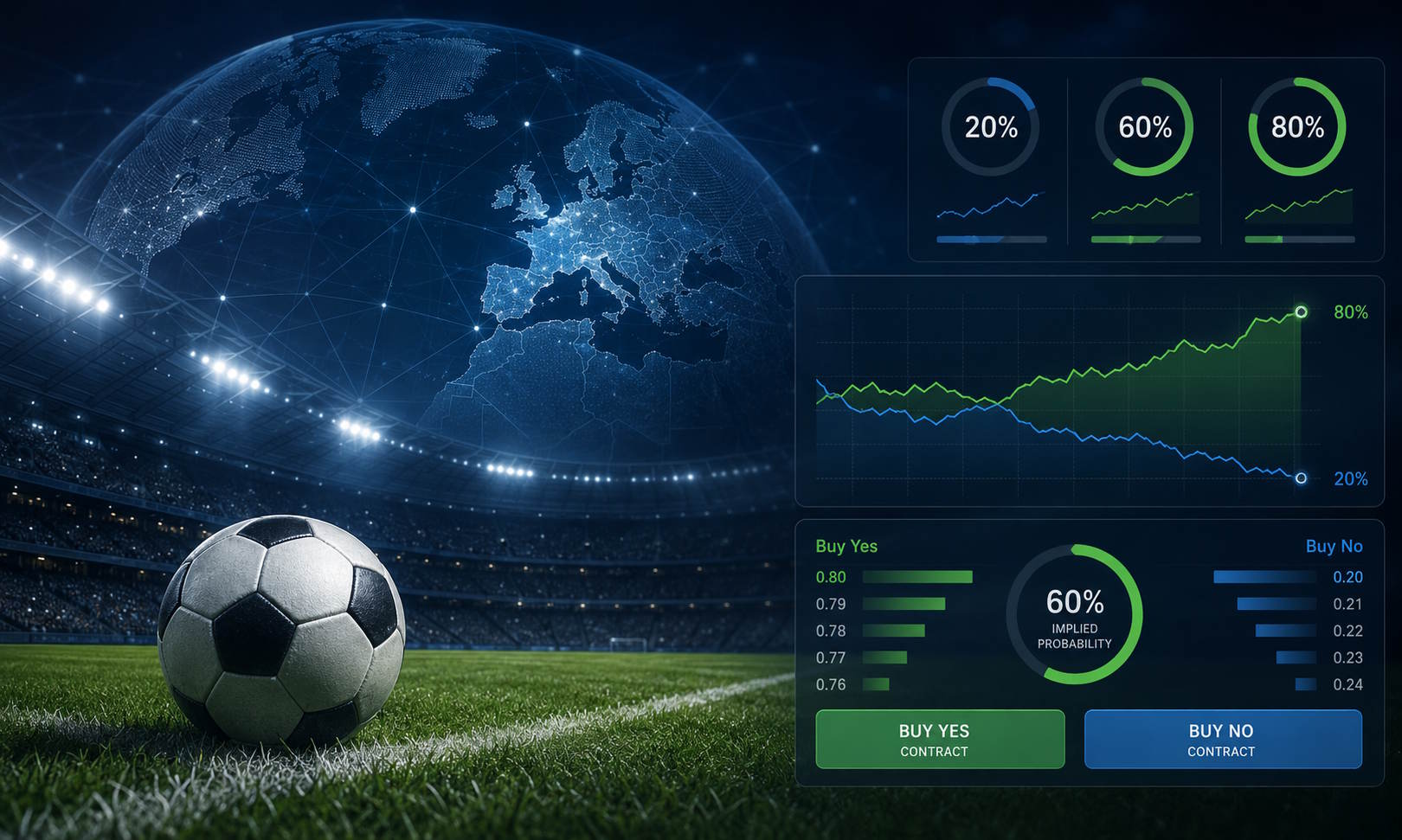
Prediction markets allow you to buy a share in the outcome of an event. For example, predictions that a team may win the league could stand at $0.80 per share, meaning the prediction market thinks they have an 80% chance of winning. Players can buy and sell these contracts amongst themselves, so unlike traditional betting, they don’t play against the bookmakers. Instead, the operators collect a small fee.
This allows different ways to wager on soccer. Imagine a team started the season with three defeats in a row to relatively poor opposition. You may be able to buy a contract for $0.20. Should they then start a great run and push to first in the league, this prediction may rise to $0.60. You could then sell this at a higher price.
Some have compared prediction markets to gambling sites, particularly to sports wagering sites, rather than sites offering exclusively slots UK, or casino table games, for example. However, officially, prediction markets have not been considered gambling by the US regulators due to their model.
Prediction markets have made their way into European football, with the top prediction market platforms now sponsoring Spanish and Italian football through La Liga and Serie A. This shows how prediction markets are entering the sport and could even act as a major competitor to gambling sponsorships.
Prediction Markets in US Sports
Prediction markets have already made their way into sports in the United States. Part of this has been down to backing from the federal government. The Commodity Futures Trading Commission recently said that they will be classed as federally regulated derivatives.
Major League Soccer recently signed a deal with one of the biggest prediction providers, and it is expected that the MLB will do the same. Even the recent NBA All Star Weekend featured a Tech Summit that had speakers from two of the major brands and operators.
Gauging Public Opinion
For those who don’t yet use prediction markets, they can still be used as a good gauge of public sentiment when it comes to football. This gives another way to look at sport beyond social media and the pundits' opinions.
You can also see how people feel about certain games. While these seem like predictions anyone could make, in closer calls in league and cup matches, they can provide further insights and are increasingly quoted by the media.
Prediction markets are set to grow across the globe. Many European countries have strict regulations, so changes will not be swift. Yet it may not be long before we see prediction markets sponsoring clubs much as betting companies do now.